World Cup 2026 in Mexico: where to go between matches
Mexico hosts 13 FIFA World Cup 2026 matches across three venues. The gaps between matches leave plenty of time to escape to a Pueblo Mágico.
Mexico hosts 13 matches of the FIFA World Cup 2026 across three stadiums: the iconic Estadio Azteca in Mexico City, Estadio Akronin Zapopan (Guadalajara's metro area), and Estadio BBVAin the outskirts of Monterrey. For most groups, match days are spaced four to seven days apart. That's enough breathing room to leave the host city and discover one of the country's 177 Pueblos Mágicos — small towns recognized by SECTUR for their cultural, historical, or natural significance.
This post gives you the high-level map. Each host city has its own deep-dive guide linked at the bottom. If you'd rather plan visually, jump straight into the interactive World Cup 2026 planner.
Why visit Pueblos Mágicos during the World Cup
The host stadiums sit in Mexico's three largest metros, but the country's character lives in its smaller towns. Pueblos Mágicos are typically a 1-3 hour drive from each stadium, with cobblestone streets, colonial architecture, regional cuisine, and natural landscapes that turn a 24-hour window between matches into a memorable side trip. Crowds will be concentrated in the stadium cities; the pueblos offer a quieter parallel experience with real Mexican life.
Mexico City area — Estadio Azteca (5 matches)
Mexico City has the densest cluster of Pueblos Mágicos in the country. Within a two-hour radius of the Azteca you'll find mountain retreats, pre-Hispanic sites, and colonial mining towns. Here are five standouts to start with:
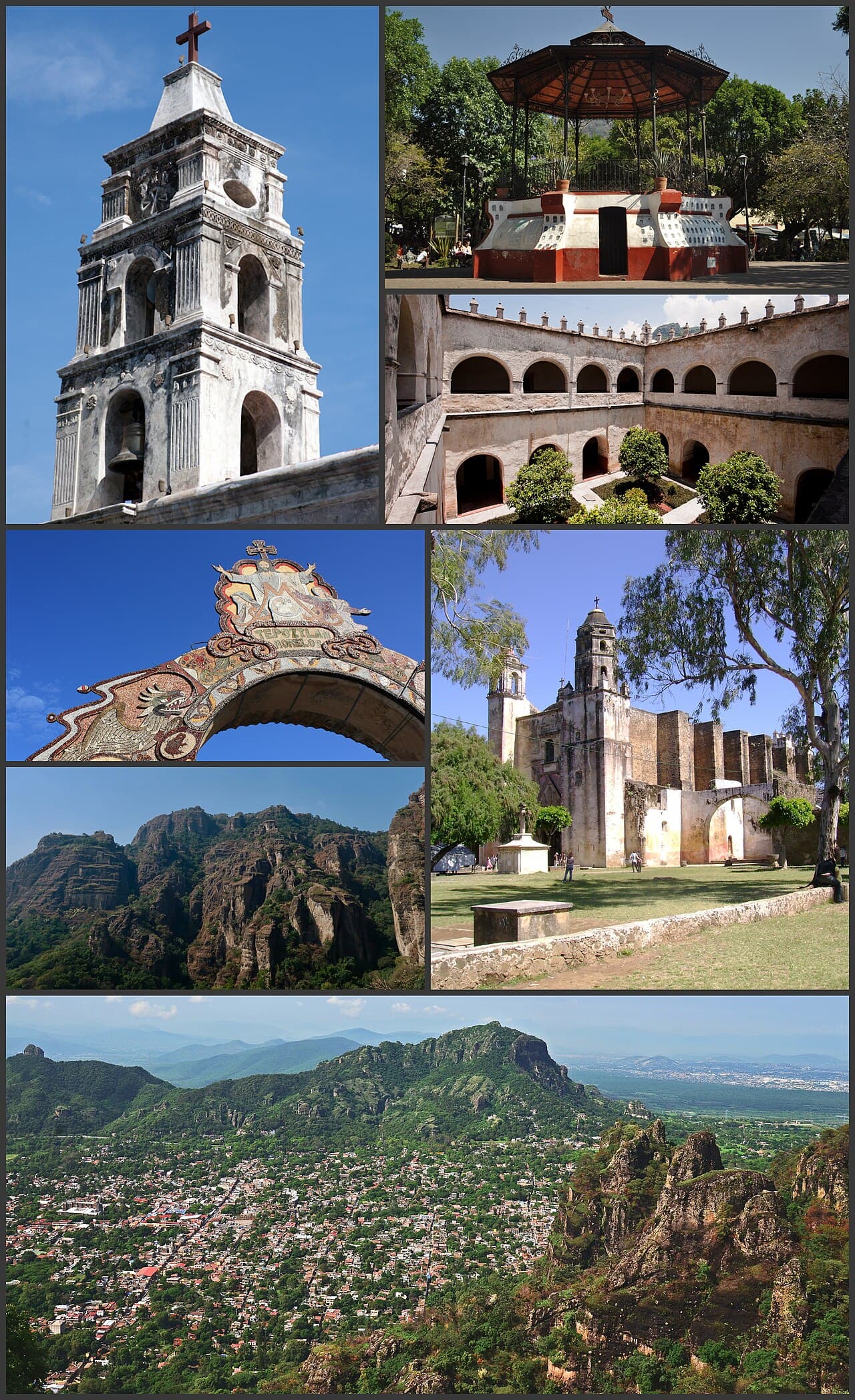
- TepoztlánMorelos36 km · 36m
Tepoztlán is a town in the central Mexican state of Morelos. It is located at 18°59′07″N 99°05′59″W in the heart of the Tepoztlán Valley. The town serves as the seat of governme...
- MalinalcoEstado de México54 km · 54m
Malinalco is the municipality inside of Ixtapan Region, is a town and municipality located 65 kilometers south of the city of Toluca in the south of the western portion of the S...
- TepotzotlánEstado de México47 km · 47m
Tepotzotlán is a city and a municipality in the Mexican state of Mexico. It is located 40 km (25 mi) northwest of Mexico City about a 45-minute drive along the Mexico City–Queré...
- MetepecEstado de México48 km · 48m
Metepec is a municipality in the State of Mexico in Mexico and is located directly to the east of the state capital, Toluca, at an altitude of 2,635 metres (8,645 ft) above sea ...
- San Andrés CholulaPuebla93 km · 1h 33m
Cholula, is a city and district located in the metropolitan area of Puebla, Mexico. Cholula is best known for its Great Pyramid, with the Iglesia de Nuestra Señora de los Remedi...
→ Read the full guide: 8 Pueblos Mágicos within 2 hours of the Azteca
Guadalajara area — Estadio Akron (4 matches)
Jalisco is the state of mariachi, tequila, and ranchera culture. The Akron is in Zapopan, part of greater Guadalajara, which puts several Pueblos Mágicos within easy striking distance — including the town that gave the world its most famous spirit.
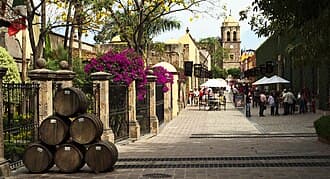
- TequilaJalisco45 km · 45m
Santiago de Tequila is a Mexican town and municipality located in the state of Jalisco about 60 km from the city of Guadalajara. Tequila is best known as being the birthplace of...
- MazamitlaJalisco97 km · 1h 37m
Mazamitla is a town and municipality of the Mexican state of Jalisco. It is located 124 km south of Guadalajara in the Southeast Region and is a popular resort destination for t...
- TapalpaJalisco87 km · 1h 27m
Tapalpa is a town and municipality in Jalisco, a state of central-western Mexico. It has an oceanic climate.
- AjijicJalisco47 km · 47m
Ajijic is a town about 5 kilometres (3.1 mi) west from the town of Chapala, part of the municipality, in the State of Jalisco, Mexico. It is situated on the north shore of Lake ...
→ Read the full guide: Pueblos Mágicos near Guadalajara
Monterrey area — Estadio BBVA (4 matches)
Northern Mexico is a different country altogether — desert landscapes, dramatic mountains, cattle ranches, and a wine tradition that predates California's by more than a century. Monterrey itself is a modern industrial metro, but within a few hours you reach some of the most unusual natural and historic sites in the republic.
- SantiagoNuevo León28 km · 28m
Santiago is a municipality and city located in the center of the Mexican state of Nuevo León. It is part of the Monterrey metropolitan area and its area comprises around 739.2 k...
- Parras de la FuenteCoahuila196 km · 3h 16m
Parras de la Fuente is a city located in the southern part of the Mexican state of Coahuila. The city serves as the municipal seat of the surrounding Parras Municipality, which ...
- Cuatro CiénegasCoahuila233 km · 3h 53m
Cuatro Ciénegas is a city in the northern Mexican state of Coahuila. It stands at 26°59′N 102°03′W, at an average elevation of 740 metres (2,430 ft) above sea level. The city se...
- Real de CatorceSan Luis Potosí230 km · 3h 50m
Real de Catorce, often shortened to Real, is a village in the Mexican state of San Luis Potosí and the seat of the municipality of Catorce. It is located 160 miles (260 km) nort...
→ Read the full guide: Pueblos Mágicos near Monterrey
How to get around
The fastest option is renting a car and using Mexico's federal toll highways (autopistas de cuota). Toll booths accept cash in pesos and most major cards. Plan fuel stops — Pemex stations are plentiful on autopistas but sparser on secondary roads. Google Maps, Waze, and Apple Maps all work well; download offline maps before long drives.
If you'd rather not drive, Mexico's long-haul bus network is excellent. Lines like ETN, Primera Plus, and Grupo Senda offer business-class service from the main terminals in each host city to most Pueblos Mágicos. Uber and DiDi work in all three metros and extend to several nearby pueblos.
Stay in the pueblo or commute from the city?
Both approaches work. Staying in the host city keeps you close to the stadium, airport, and fan zones, and lets you day-trip to several pueblos. Staying overnight in a pueblo gives you the golden hour — early morning and evening, when day-trippers have left and the plazas come alive. A common compromise is to spend match nights in the city and block out 1-2 overnight stays in a pueblo for the longer gaps between matches.
Frequently asked questions
01.How long is the drive to most Pueblos Mágicos?
It depends on the venue. From Estadio Azteca, towns like Tepoztlán or Malinalco are 1 to 2 hours away. From Akron, Tequila is about 45 minutes and Mazamitla about 2 hours. From BBVA, Santiago NL is 30 minutes and Parras de la Fuente about 2 hours. Drive times here assume 60 km/h on great-circle distance, so expect to add 15-25% for real toll roads, tollbooths, and traffic.
02.Is it safe to drive between cities in Mexico?
Federal toll highways (marked with 'D' or a $ sign) are the standard option for tourists. It's recommended to drive during daylight, avoid stopping on secondary free roads at night, and check the National Guard or your embassy's advisory before long routes. Uber and rental apps work well in all three host cities; luxury buses (ETN, Primera Plus, Grupo Senda) connect stadiums with most pueblos.
03.Do I need to speak Spanish?
Outside the largest tourist zones, English is limited. In Pueblos Mágicos near Mexico City and Guadalajara there are enough boutique hotels and restaurants with bilingual staff, but it helps to have basic phrases or a phone translator. Google Translate's offline Spanish pack is enough for most situations.
04.What are the best Pueblos Mágicos for first-timers?
For visitors new to Mexico, we recommend starting with towns that have strong tourist infrastructure, several boutique hotels, and frequent transport from the host cities: Tepoztlán (Mexico City), Tequila (Guadalajara), and Santiago NL (Monterrey). All have compact walkable centers and combine easily with a match the same day or the next.
05.Can I take public transport?
Yes, to many pueblos. Central bus terminals (Terminal del Norte and TAPO in Mexico City, Nueva Central Camionera in Guadalajara, Central de Autobuses in Monterrey) run direct service to popular pueblos. More remote towns (Real de Catorce, Cuatro Ciénegas) are harder without a car. Uber and car rentals are viable alternatives if you'd rather not drive long distances.
Sources
References and further reading
- Tepoztlán — Wikipedia
- Malinalco — Wikipedia
- Tepotzotlán — Wikipedia
- Metepec — Wikipedia
- San Andrés Cholula — Wikipedia
- Tequila — Wikipedia
- Mazamitla — Wikipedia
- Tapalpa — Wikipedia
- Ajijic — Wikipedia
- Santiago — Wikipedia
- Parras de la Fuente — Wikipedia
- Cuatro Ciénegas — Wikipedia
- Real de Catorce — Wikipedia
- Pueblos Mágicos Program — SECTUR (Mexican Ministry of Tourism)
- INEGI — Mexican National Institute of Statistics and Geography
- FIFA — 2026 World Cup Canada-Mexico-USA
- Estadio Azteca — Wikipedia
- Estadio Akron — Wikipedia
- Estadio BBVA — Wikipedia
- Methodology and data freshness — WikiPueblosMágicos
Accessed 2026-10-19
Continue exploring
Plan your World Cup trip
Use the interactive map and curated lists for each stadium
Plan your World Cup trip →Continue reading
Day trips from Mexico City during World Cup 2026: 8 Pueblos Mágicos within 2 hours
Estadio Azteca hosts 5 matches. Few cities anywhere have this many character-rich towns within easy reach — here are the ones worth the drive.
11 min read
Pueblos Mágicos near Guadalajara: explore Jalisco between World Cup 2026 matches
Estadio Akron in Zapopan hosts 4 matches. Jalisco is mariachi, tequila, lakes, and sierra — all within a short drive.
10 min read
Mexico's 10 top-rated Pueblos Mágicos in 2026
A real ranking — not editorial opinion. We compute a composite score from Google and TripAdvisor reviews, search volume, pricing, and availability. These are the 10 Pueblos Mágicos that top the list.
8 min read